On this page
- How does a commodity trade begin?
- How is a physical cargo priced?
- How does freight work in commodity trading?
- How does storage create trading opportunities?
- How is a commodity trade financed?
- How does paper trading relate to physical trading?
- How does settlement close a commodity trade?
- How do the stages of a commodity trade interlock?
- Key Takeaways
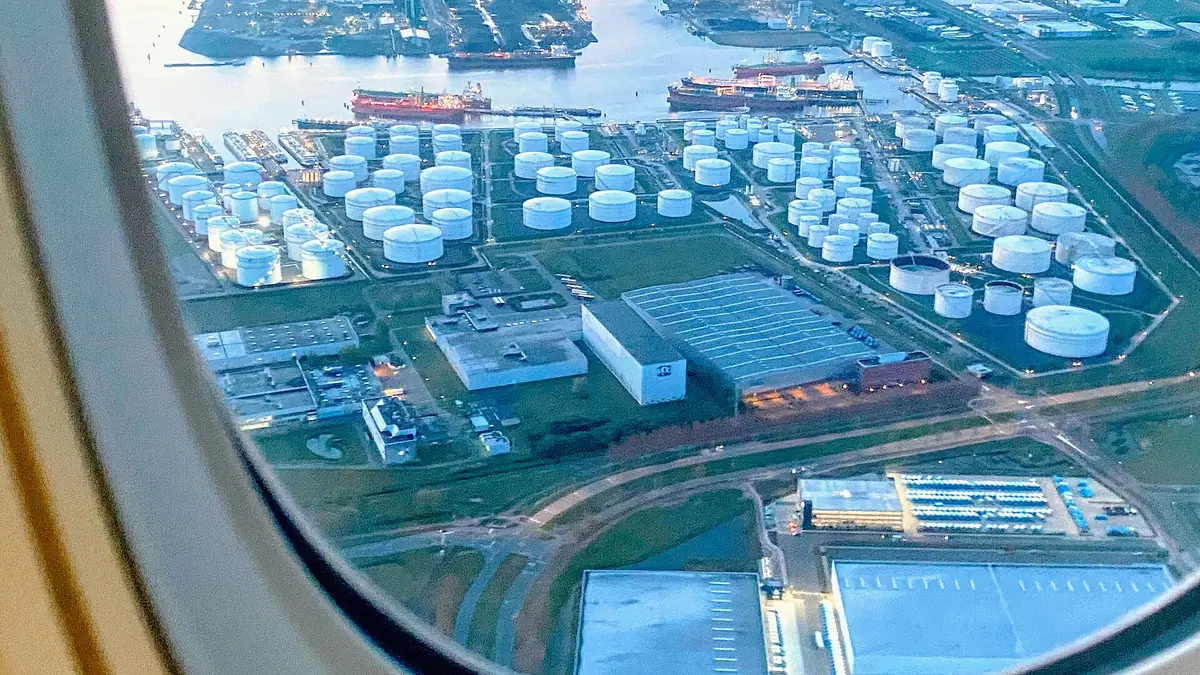

Commodity trading is the business of moving physical goods from where they are produced to where they are consumed, while managing the price, logistics, and credit risks created along the way. Every physical trade is underpinned by a parallel set of financial flows: a price reference, a hedge, a financing line, and a payment mechanism. Understanding how these two chains interlock is what separates a real grasp of the industry from the simplified view that commodities are just about betting on prices.
This guide walks through the full trade lifecycle, from sourcing a cargo to final settlement, and shows where paper markets attach to each physical step. For definitions of specific terms, see our commodity trading glossary.
How does a commodity trade begin?#
Every commodity trade starts with an imbalance: a producer with output to sell, a consumer with demand to fill, and a trader positioned between them. Sourcing is the process of finding, evaluating, and contracting that flow. Typical sourcing channels include direct producer contracts, tenders, spot purchases, and exchange-based procurement.
Typical sourcing channels include:
- Direct contracts with producers, such as term offtake agreements with mines, refineries, or oil producers
- Tenders issued by governments, utilities, or state-owned companies, common in grains, fertilizers, and crude oil
- Spot purchases from other traders or brokers, often standardized through frameworks like the standard sale and purchase agreements used in oil markets
- Exchange-based procurement, where warehouse receipts or exchange warrants allow physical delivery against futures positions
What does the commercial negotiation cover?#
The commercial negotiation covers more than price. Parties agree on quality specifications and tolerances, delivery terms, the pricing basis, quantity, laycan (the delivery window), and the contractual fallback if something goes wrong: arbitration venue, force majeure clauses, and demurrage rules. A well-drafted contract allocates risk deliberately; a sloppy one leaves the trader holding exposures it did not price.
Sourcing is also where the trader’s edge lives. A trader who has better information about a refinery outage, a port congestion problem, or a producer’s need for cash can buy below the market’s implied value. This informational and logistical advantage, not directional price speculation, is the core of most physical trading profit.
How is a physical cargo priced?#
Once a cargo is contracted, commodity pricing turns it into a price exposure. Most commodity trades do not fix a single number at signing; instead they reference a benchmark observed later, often while the cargo is in transit. The trader’s market view is expressed through the differential between the benchmark and the specific cargo.
Common pricing structures include:
| Pricing basis | How it works | Typical use |
|---|---|---|
| Fixed price | A single price agreed at contract signature | Refined products, some metals |
| Floating against a benchmark | Price set as benchmark plus or minus a differential, averaged over agreed dates | Crude oil, LNG, most oil products |
| Futures exchange settlement | Price tied to a futures settlement window (e.g., M+1 average) | Oil, gas, metals |
| Index or assessment | Price tied to a published index | Coal, iron ore, gas (e.g., TTF) |
| Cost-plus or formula | Price derived from input costs or a formula | Some petrochemicals, fertilizer |
How does the differential express a trading view?#
The differential, or basis, is where the trader’s market view is expressed. If a trader believes a specific crude grade will be cheap relative to its benchmark, buying that cargo floating means the benchmark leg can be hedged while the differential view plays out. To understand how benchmarks themselves behave differently, see Brent vs WTI: Crude Oil Benchmarks Compared and How the TTF Gas Price Works.
The assessments underpinning these formulas are produced by price reporting agencies, whose methodologies determine what a contract actually settles against. Our piece on what price reporting agencies actually do covers how those numbers are built.
This floating structure is precisely why paper markets exist. A cargo priced off an average of benchmark prints over a month creates an exposure that can be offset by selling futures or swaps over the same window. The physical contract creates the exposure; the paper market neutralizes or shapes it.
How does freight work in commodity trading?#
Most internationally traded commodities are sold on Incoterms that put ocean transport at the center of the deal, and freight is itself a traded commodity with its own hedge. In oil, the standard is FOB (free on board, seller delivers onto the vessel) versus CFR/CIF (cost and freight, or cost, insurance and freight, seller arranges shipping to the destination port). The choice determines who controls the voyage and who bears freight risk.
Freight is itself a traded commodity. Tanker rates float with vessel supply and cargo demand, and a trader fixing a ship at the right moment can capture the difference between the freight cost embedded in a sale price and the actual cost of the voyage. Freight forward agreements (FFAs) allow freight exposure to be hedged or speculated on in a paper market, exactly parallel to cargo price hedging.
Key freight decisions include:
- Vessel size and type, matched to cargo volume, port restrictions, and draft limits
- Voyage routing, including canal choices (Suez, Panama) and increasingly emissions-related route economics
- Laycan and nomination management, to avoid demurrage from missed loading windows
- Freight hedging, using FFAs when the freight market is volatile
Why does demurrage matter?#
Demurrage deserves emphasis: if a vessel waits beyond its allowed laytime, the charterer pays a daily penalty. Traders employ operations teams whose entire job is tracking port congestion, berth availability, and documentation speed to keep demurrage off the profit and loss statement. In trades where margins are cents per barrel, a few days of demurrage can erase the deal’s entire margin.
How does storage create trading opportunities?#
Storage turns a commodity from a flow into an inventory, and inventory is itself a position. Holding barrels in a tank or grain in a silo is a bet that the price at some future date will exceed today’s price plus the cost of carry (storage fees, financing, insurance, and quality losses). The shape of the futures curve directly signals physical market tightness.
This creates the classic cash-and-carry relationship: when the futures curve is in steep contango (forward prices above spot), it can pay to buy physical, store it, and sell forward simultaneously, locking in the difference. When the curve is in backwardation, holding inventory costs money, and stocks drain toward consumers. The shape of the curve is thus a direct signal about physical market tightness.


Storage also enables blending and quality arbitrage. Traders hold grades in tanks and blend them to meet specific refinery or customer specifications, capturing the spread between the sum of inputs and the value of the output. This is routine in oil products trading hubs like Singapore and the Amsterdam-Rotterdam-Antwerp region.
Strategic storage decisions depend on location quality. A tank in a netback-advantaged location, connected to pipelines, with flexible specifications and a liquid local market, is worth more than the same tank in a remote port. Leasing storage is therefore both a logistics decision and a trading one.
How is a commodity trade financed?#
Commodity trades are working-capital intensive: a trader may pay for a cargo weeks before it is sold, and the gap between payment and receipt must be financed. Trade finance is the circulatory system of the industry, with instruments including letters of credit, borrowing base facilities, prepayment structures, inventory repo, and forfaiting. Financing cost directly affects trade economics.
The main instruments:
| Instrument | Purpose | Typical stage |
|---|---|---|
| Letter of credit (LC) | Bank guarantees seller payment against documents | Payment at loading |
| Documentary collection | Cheaper, bank-mediated document exchange, less secure than LC | Payment at loading |
| Borrowing base facility | Revolving credit secured by inventory and receivables | Ongoing working capital |
| Prepayment / prefinance | Buyer lends against cargo before shipment | Producer financing |
| Repo / inventory finance | Loan secured by warehouse receipts | Storage phase |
| Forfaiting | Sale of receivables, removing country and credit risk | Post-delivery settlement |
How does a letter of credit work?#
The letter of credit is the workhorse. The buyer’s bank commits to pay the seller when the seller presents the exact documents required by the LC: bill of lading, certificate of quality, certificate of origin, invoice. Because payment depends on documents rather than goods, document quality becomes a matter of cash flow. We cover the mechanics in Letters of Credit in Commodity Trade Finance.
Financing cost directly affects trade economics. A deal with a thin gross margin can be profitable for a trader with cheap credit and unprofitable for one paying more, which is why access to competitively priced capital is a structural advantage. This is one reason major trading houses cluster where financing and legal infrastructure support the activity, a dynamic explored in why Geneva became a global commodity trading hub.
How does paper trading relate to physical trading?#
Paper trading means transacting in futures, swaps, forwards, and options without intending physical delivery. In the industry’s own vocabulary, paper and physical are distinct desks, but they are two halves of one risk position. Physical contracts are usually priced off the same benchmarks that futures and swaps reference, which makes paper markets the natural hedge for physical exposure.
The overlay works because physical contracts are usually priced off the same benchmarks that futures and swaps reference. Consider a simplified crude trade:


- Trader buys a cargo priced at the average of benchmark futures settlements over the loading month.
- Trader immediately sells futures over the same window, locking in the margin between the sale differential and the purchase cost.
- As the loading month passes, the trader buys back futures as the cargo prices out, the physical floating purchase and the paper short offsetting each other.
- The trader is left with the differential margin, not a directional bet.
This is hedging, and it is the default posture of physical traders. Speculative paper positions are taken separately, when the trader has a view on outright prices, curve shape, or differentials between locations and grades. For a fuller treatment of the distinction, see Physical vs Paper Trading: Key Differences, and for hedging techniques, Energy Hedging Strategies Explained Simply.
What else do paper markets do beyond hedging?#
Paper markets also serve functions beyond hedging: they provide the price discovery that physical contracts reference, they allow risk transfer between parties who never meet physically, and they enable financial players (hedge funds, index investors) to take exposure to commodities without touching a barrel or a bushel. This is why the physical and paper markets can diverge in liquidity and participants while remaining tightly linked in price.
How does settlement close a commodity trade?#
Settlement closes the loop in a commodity trade: documents are presented, payment is made, title transfers, and the trade drops off the book. In practice, settlement is a reconciliation exercise involving invoice settlement, hedge close-out, credit line release, and documentation audit. Most commodity trading disputes are settlement disputes over quality certificates, demurrage, or benchmark prints.
In practice, settlement is a reconciliation exercise involving several flows:
- Commercial invoice settlement, often net of demurrage claims, quality adjustments, and freight differences
- Hedge close-out, matching futures and swaps cash flows against the physical pricing
- Credit line release, freeing the borrowing base for the next cargo
- Documentation audit, ensuring the paper trail would survive scrutiny from banks, auditors, and regulators
Most disputes in commodity trading are settlement disputes: disagreements over quality certificates, demurrage calculations, or the exact benchmark prints used in a pricing formula. Contracts specify arbitration rules and venues precisely because these disagreements are expected, not exceptional.
How does regulation affect settlement?#
Regulation increasingly reaches into this final stage. Reporting obligations under regimes like EMIR in the EU, and Swiss rules covered in FinfraG Explained: Swiss Commodity Trading Rules, require trades in derivatives to be reported and, in some cases, cleared. For EU-facing energy traders, EMIR vs MiFID II: What Energy Traders Must Know and REMIT Explained: EU Energy Market Abuse Rules outline the compliance perimeter.
How do the stages of a commodity trade interlock?#
The commodity trade lifecycle is best understood as one system because each stage creates a risk that another stage manages. Floating pricing creates price risk that paper markets hedge. Long transit creates financing need that trade finance fills. Storage creates carry exposure that the futures curve prices. Freight volatility creates exposure that FFAs offset. A trader’s profit is the residual after all of these are managed.
A useful mental model: a physical cargo is a bundle of exposures (price, freight, credit, quality, timing) wrapped in a contract. Trading is the business of pricing that bundle correctly, selling off the pieces you do not want, and keeping the pieces where you have an edge. The trader who only sees the price exposure is competing against traders managing all six.
This is also why the industry’s economics look strange to outsiders. Gross margins per unit are thin, capital turns over quickly, and profit comes from volume, risk management quality, and informational advantage rather than large single-deal wins. It is a business of repeatability.
Key Takeaways#
- A commodity trade is a chain: sourcing, pricing, freight, storage, financing, settlement, and each link creates risks the next link manages.
- Most physical contracts price off benchmarks observed after signing, which is exactly what makes paper market hedging possible and necessary.
- Freight, storage, and financing are not overhead; they are traded exposures with their own markets, hedges, and arbitrage opportunities.
- Trade finance instruments, especially letters of credit, bridge the cash gap between paying for cargo and being paid for it, and financing cost is a competitive differentiator.
- Settlement is where disputes and reconciliation concentrate, and where regulatory reporting obligations now land.
- The physical and paper markets are one system: physical flows create exposures, paper flows shape them, and neither makes full sense without the other.
Key concepts
More in Foundations Glossary of key terms
Frequently asked questions
What are the main stages of a commodity trade?
A trade moves through sourcing and contract negotiation, pricing, freight and logistics, storage, financing, and finally settlement and delivery. Each stage involves distinct risks that traders manage through contract terms, hedging, and credit instruments.
How does paper trading relate to physical commodity trading?
Paper trading uses futures, swaps, and other derivatives to hedge or speculate on price movements without moving physical goods. Most physical traders use paper markets to offset the price exposure created by buying and selling real cargoes.
Why is financing so important in commodity trading?
Commodity trades are capital intensive and often involve long gaps between paying for cargo and receiving sale proceeds. Instruments like letters of credit and borrowing-base facilities fund cargoes and bridge this cash gap, making credit access central to trading profitability.
What does a commodity trader actually do day to day?
A trader sources cargoes, negotiates contracts and pricing terms, hedges price exposure, arranges freight and storage, and manages credit and operational risk. The role blends market judgment with logistics and financial engineering.